






Power factor for lamps
According to BRE’s The essential guide to retail lighting:
The term ‘power factor’ is ‘…A measure of the phase difference between the voltage and current in an alternating current (AC) supply. For lamp types other than incandescent, the voltage and current waveforms are not exactly in phase with one another: thus the volts multiplied by the amperes in the circuit may be higher than the Watts. In such cases, the Watts represent the active power, and the volts multiplied by the amperes represent the apparent power. The power factor is the ratio of the absolute value of the active power to the apparent power. Ideally, the power factor should be as close to unity as possible. A low value of the power factor increases the current load and the energy consumption. Most high-wattage lamp circuits are designed to have a power factor greater than 0.85.’
[edit] Find out more
[edit] Related articles on Designing Buildings Wiki
- Ballast or control gear.
- Colour appearance.
- Daylight benefits in healthcare buildings.
- Daylight factor.
- Daylight lighting systems.
- Dichroic reflector.
- Discharge lamp.
- Extra-low voltage lamps.
- General lighting v task lighting.
- Illuminance.
- Lamp.
- Lamp efficacy.
- Light pollution.
- Lighting.
- Lighting energy numeric indicator LENI.
- Lighting of construction sites.
- Luminaire efficacy.
- Rights to light.
- The Future of Electricity in Domestic Buildings.
- The UK’s low-carbon future is increasingly electric.
Featured articles
Check out some of the best features and news from Designing Buildings as well as key stories from around the web.

New Prime Minister delivers on ECA call for cut in electricity costs.

CIOB reacts to the announcement of Andy Burnham as Prime Minister.

Heritage and conservation science workforce survey - Have your say.

England's Suburbs 1820-2020. Book review.

New, more proportionate and targeted approach for higher-risk building assessments.

Government brings British Steel into public ownership.

UKCW Birmingham returns with bold new theme and focus.

New guidance published on competence requirements for self-certification schemes.
Construction Management, 8 July

NEETs crisis drives interest in trades, but apprenticeships barriers remain.
Passive fire protection webinar
MEP services penetration seals.

Where its at podcast (and video) - The role of the Architectural Technologist as an Expert Witness.
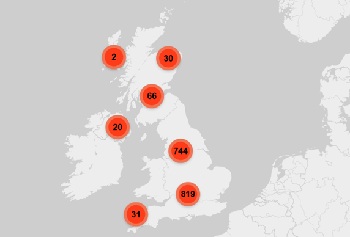
More than 200 remarkable buildings added to SAVE’s Buildings at Risk register.